
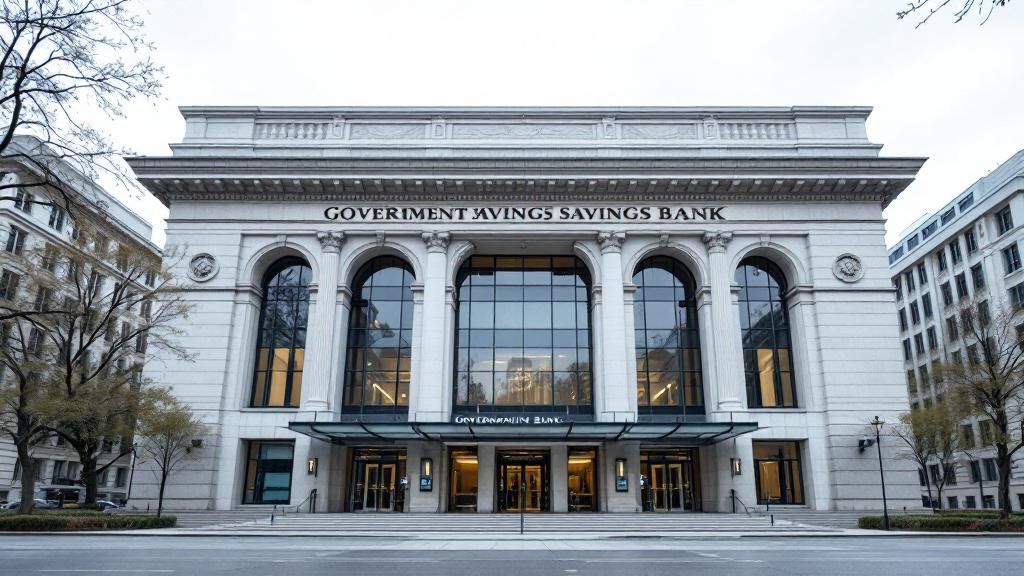
National Savings and Investments (NS&I) faces a compensation bill potentially running into hundreds of millions of pounds after systemic problems in overseeing account management, encompassing situations where bereaved families were denied money that was rightfully theirs. The publicly-owned bank, which serves more than 24 million people, is alleged to have committed a range of failings spanning years, with complaints ranging from unpaid Premium Bond winnings to lost investments and late payments. Pensions Minister Torsten Bell will be presenting the extent of the issues to MPs in the House of Commons on Thursday, with reports suggesting roughly 37,000 customers could be impacted. Treasury officials are now liaising with NS&I to establish the precise financial settlement, though the true scale of the difficulties has yet to be determined.
The extent of the crisis developing at the country’s savings bank
The complete scope of NS&I’s system malfunctions stays unclear, with Treasury officials attempting to ascertain the exact compensation bill customers are owed. Investment manager Zoe Gillespie from RBC Brewin Dolphin identified the root problem, pointing to NS&I’s struggling technology upgrade, which is well behind timetable. “There appears to be some issues with possible technology or customer service problems,” she told the BBC’s Today broadcast. The bank’s struggle to deliver its £3 billion system upgrade has seemingly contributed to the string of mistakes impacting numerous savers and their families.
Individual cases highlight a deeply worrying picture of organisational shortcomings. One bereaved daughter of a deceased saver was kept in the dark regarding Premium Bonds her mother owned, whilst the bank concurrently misplaced £2,000 in bonds registered in the daughter’s own name. In another instance, NS&I neglected to preserve records of two accounts connected with an investment portfolio, eventually refunding the family for tax interest alongside significant legal fees they incurred attempting to retrieve their money independently. Such cases underscore how grieving families have shouldered additional financial and emotional burdens.
- Premium Bond prizes kept from families of deceased savers
- Delayed payments and failed to monitor customer investments
- Bereaved families compelled to engage legal representatives to retrieve money
- £3bn modernisation programme running years late
Bereaved families left without rightful inheritance and investment returns
The failures at NS&I have affected most severely those grieving. Families who lost loved ones claimed that the bank retained funds that rightfully belonged to deceased relatives or their probate accounts. Some families discovered that Premium Bond winnings won by their deceased family members were never paid out, whilst others found money had gone missing from account records entirely. The bank’s failure to handle claims from bereaved families in a timely manner has compounded the psychological distress of the loss of a relative, requiring grieving relatives to navigate bureaucratic obstacles when they ought to have been grieving.
What makes these failures particularly troubling is that some families have incurred significant additional costs attempting to retrieve their inheritance. Several have been compelled to hire solicitors and legal professionals to lodge claims that NS&I should have handled straightforwardly. Beyond the financial burden, these families have experienced months or even years of doubt, constantly pressing the bank for answers about lost accounts, unclaimed prizes, and investment portfolios that appeared to have been removed from the institution’s systems entirely.
Premium Bond prizes withheld from bereaved family members
Premium Bond investors and their relatives have been significantly impacted by NS&I’s operational shortcomings. When savers with Premium Bonds pass away, their next of kin have a right to claim any prizes won during the decedent’s life or to transfer the bonds to beneficiaries. However, evidence suggests NS&I systematically failed to communicate prize winnings to bereaved relatives, effectively keeping money that was owed to grieving families. Some relatives only found out about the unpaid winnings long afterwards, by which time further issues had arisen.
The bank’s management of Premium Bond accounts has been particularly problematic when families themselves held individual bonds alongside the deceased’s investments. In documented cases, NS&I misplaced both the deceased person’s assets and the family member’s own bonds at the same time, suggesting systemic record-keeping failures rather than individual mistakes. Families have characterised the experience as adding to their distress, obliging them to prove possession of investments the bank should have maintained meticulous records for.
- Withheld monetary awards from late Premium Bond owners
- Failed to monitor multiple accounts in the names of identical families
- Did not inform beneficiaries of valid inheritance rights
Modernisation initiative responsible for widespread service delivery problems
NS&I’s persistent struggles have been connected with a £3 billion modernisation initiative that has missed its timeline by years. The postponements affecting the bank’s IT infrastructure appear to have produced knock-on difficulties across customer support functions, leading to the operational mistakes that have harmed tens of thousands of savers. Industry specialists have proposed that the bank’s inability to complete this crucial modernisation on schedule has resulted in older platforms incapable of handling the volume and complexity of customer accounts, especially those with numerous relatives or deceased customers.
The extent of the modernisation challenge facing NS&I should not be underestimated. As a government-backed institution catering to more than 24 million customers, with over 22 million Premium Bond owners, the bank demands strong infrastructure designed to process complicated inheritance situations and prize payouts. The postponements in updating these systems have rendered the bank at risk of just these sorts of data management issues now being revealed. Industry observers have warned that without timely completion of the upgrade initiative, customer confidence in NS&I may decline further.
Technology and infrastructure difficulties at the core of problems
According to investment manager Zoe Gillespie from RBC Brewin Dolphin, the technology and customer service issues plaguing NS&I are fundamentally rooted in the bank’s failure to update its systems on time. She emphasised that NS&I must “take the initiative” to rebuild investor and saver trust in the institution. The modernisation initiative’s postponements have resulted in a scenario in which legacy systems have difficulty managing client accounts properly, notably in delicate situations involving bereavement and inheritance claims where accuracy and promptness are paramount.
Parliamentary oversight and public concerns grow over payouts bill
Pensions Minister Torsten Bell is likely to encounter searching questioning from MPs when he speaks to the House of Commons on Thursday about the compensation payments. The announcement will constitute the first parliamentary acknowledgement of the magnitude of NS&I’s failings, with lawmakers probable to push the government on whether ultimately taxpayers could be liable for the many-hundred-million-pound bill. The minister’s statement comes as Treasury officials operate behind closed doors with NS&I to establish the exact sum owed to customers affected, though the total scope of the problem remains uncertain.
The potential taxpayer liability constitutes a significant matter of concern for the government, given that NS&I is a state-owned institution. Questions are increasingly being raised about how such extensive operational breakdowns were allowed to persist for years without sufficient oversight or intervention. The government will need to offer assurance that proper accountability mechanisms exist and that steps are being implemented to prevent similar issues recurring. With approximately 37,000 customers potentially affected, the compensation bill could easily surpass several hundred million pounds.
| Key concern | Details |
|---|---|
| Taxpayer responsibility | MPs expected to question whether public funds will cover compensation costs for government-backed bank failures |
| Scale of problem | Approximately 37,000 customers affected with compensation potentially running into hundreds of millions of pounds |
| Systemic oversight failure | Questions over how errors dating back years went undetected and unaddressed by regulatory authorities |
| Institutional credibility | Government must restore public confidence in NS&I and demonstrate commitment to modernisation programme completion |
- Bereaved families denied access to Premium Bond prizes and inherited funds for extended periods
- Customers forced to hire lawyers and face solicitor fees to retrieve their own money
- NS&I modernisation programme delayed years, creating IT infrastructure problems
Renewing trust in Britain’s oldest savings institution
National Savings and Investments faces a significant challenge of its credibility as it attempts to rebuild confidence among its 24 million account holders in the wake of the revelations of widespread operational shortcomings. The institution, which can be traced back to 1861 as the Post Office Savings Bank, has traditionally been seen as a secure option for British savers looking for state-guaranteed protection. However, the compensation scandal risks damaging years of accumulated goodwill. NS&I’s management team must now show genuine commitment to tackling the underlying reasons of these failures, especially the systems shortcomings that have plagued its £3 billion modernisation programme, which continues to be years off track.
Investment experts have advocated for NS&I to implement swift measures to rebuild public confidence. Zoe Gillespie, investment advisor at RBC Brewin Dolphin, highlighted the need for the institution to “get on the front foot” in addressing customer concerns. The bank’s apology, whilst accepting the failures especially around bereavement, amounts to merely a first step. Genuine rebuilding of confidence will necessitate transparent communication about the modernization program’s progress, specific deadlines for handling customer complaints, and robust safeguards ensuring such failures cannot recur. Without prompt and concrete steps, NS&I stands to lose the trust that has underpinned its position as the UK’s leading state-owned savings organisation.
